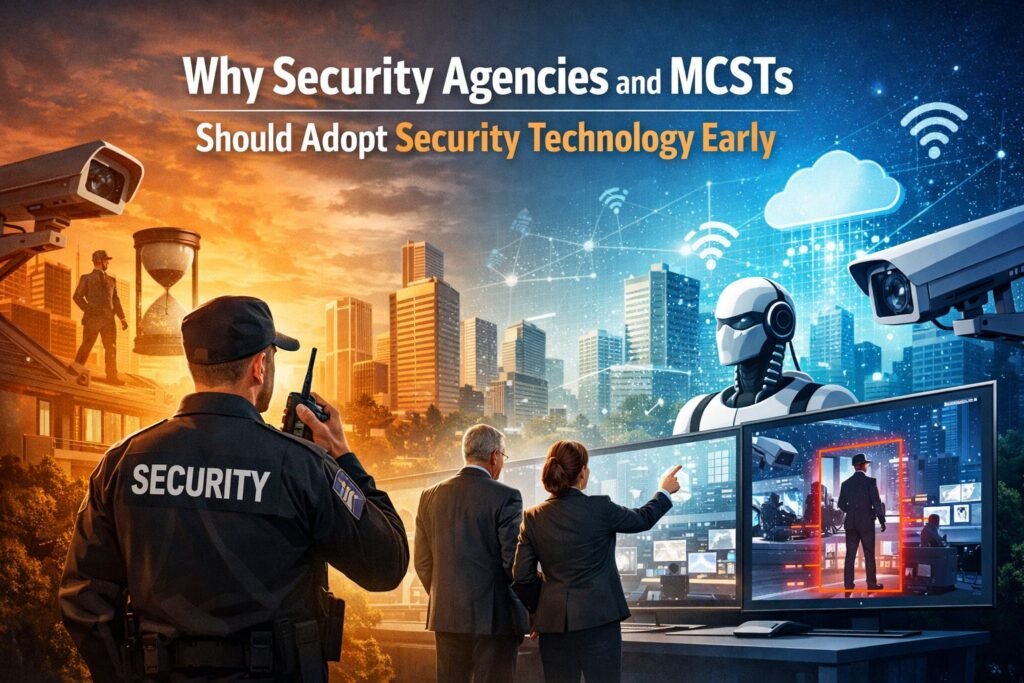
Why Security Agencies and MCSTs Should Adopt Security Technology Early
The security landscape in Singapore and across the region is changing rapidly. Rising manpower costs, tightening regulations, and higher expectations from clients and residents are placing increasing pressure on traditional security models. For security agencies and MCSTs (Management Corporation Strata Title), the question is no longer whether technology should be adopted but when.
Organisations that adopt security technology early consistently outperform those that delay. They operate more efficiently, manage costs better, and are better prepared for future challenges. This article explains why early technology adoption matters, what benefits it delivers, and what risks exist for those who wait.
The Reality Facing Security Agencies and MCSTs Today
Security agencies face persistent manpower shortages, rising wages, and growing difficulty in retaining trained guards. At the same time, MCSTs are under pressure to keep maintenance fees under control while ensuring resident safety and regulatory compliance.
Traditional manpower-heavy security models struggle to meet these demands. Increasing guard numbers is costly and often unsustainable. Technology offers a way to strengthen security outcomes without relying solely on manpower.
Why Early Adoption Creates Long-Term Advantage
Early adoption allows organisations to integrate technology gradually and strategically. Instead of reacting to incidents, complaints, or regulatory pressure, early adopters shape how technology fits into their operations.
Organisations that adopt early benefit from:
– Lower long-term costs
– Smoother operational transitions
– Better-trained personnel
– Greater control over system design
– Stronger competitive positioning
Late adoption often involves rushed deployments, higher costs, and steeper learning curves.
Technology as an Enabler, Not a Replacement
A common misconception is that technology replaces security guards. In reality, modern security technology enhances human performance.
AI-powered video analytics, smart surveillance, and centralised monitoring systems:
– Monitor continuously without fatigue
– Reduce false alarms
– Detect abnormal behaviour early
– Provide visual context for faster response
Guards supported by technology become more effective decision-makers rather than passive observers.
Why Security Agencies Benefit from Early Adoption
Security agencies that adopt technology early gain clear business advantages.
First, they differentiate themselves in tenders. Clients increasingly prefer technology-enabled security solutions that deliver measurable outcomes.
Second, they protect margins. Technology reduces reliance on excessive manpower, allowing agencies to scale operations sustainably.
Third, they build operational maturity. Early adopters gain valuable experience deploying and managing technology, which becomes a long-term capability.
For agencies, technology adoption is a strategic investment, not just an operational upgrade.
Why MCSTs Should Act Early
For MCSTs, early technology adoption improves safety while controlling costs.
Technology enables:
– Wider coverage without increasing guard headcount
– Faster detection and response to incidents
– Improved transparency and reporting
– Better planning of long-term security budgets
Early adopters can implement solutions in phases, reducing disruption and financial shock.
Cost Control Through Early Planning
Contrary to popular belief, early adoption often reduces overall costs.
Planned deployments allow:
– Integration with existing infrastructure
– Gradual investment instead of sudden spending
– Proper training and change management
– Optimised system configuration
Late adoption is often reactive and expensive.
Regulatory Readiness and Compliance
Compliance requirements related to safety, accountability, and data protection are increasing. MCSTs and security agencies must demonstrate not just presence, but effectiveness.
Technology supports:
– PDPA-compliant surveillance practices
– Secure access controls
– Audit trails and reporting
– Consistent enforcement of security procedures
Early adopters are better prepared for audits and regulatory changes.
Building Trust with Residents and Clients
Trust is essential in security operations. Residents and clients expect modern, reliable, and responsible security systems.
Technology-enabled security:
– Reduces subjective decision-making
– Improves incident transparency
– Enhances professionalism
– Builds confidence in management and service providers
Early adoption signals commitment to safety and quality.
The Risk of Waiting Too Long
Delaying adoption carries real risks:
– Higher manpower and operating costs
– Loss of tenders to more capable competitors
– Difficulty meeting rising expectations
– Forced, reactive upgrades after incidents
In a competitive environment, inaction is itself a risk.
How to Start Adopting Technology Early
Early adoption does not require a full overhaul. A practical approach includes:
– Assessing current security challenges
– Identifying where technology adds the most value
– Running pilot projects
– Training personnel
– Refining operational workflows
The goal is continuous improvement, not disruption.
Security agencies and MCSTs that adopt technology early gain efficiency, resilience, and competitive advantage. Technology is no longer optional in modern security operations.
The real question is whether adoption happens proactively — or under pressure later.
Conclusion
The future of security belongs to organisations that prepare early. Security agencies and MCSTs that embrace technology today will be better positioned to manage costs, improve safety, and meet future demands.
Those who act early gain control and confidence. Those who wait risk higher costs and lost opportunities.